How to Create an Online PR Strategy for Product Launches
An effective Online PR Strategy helps businesses introduce new products, reach relevant audiences, generate media attention, and build customer trust before and after a launch. In a competitive digital marketplace, simply announcing a new product is rarely enough. Businesses need a structured communication plan that explains the product’s value, attracts media interest, and encourages potential customers to learn more.
A successful Online PR Strategy combines digital media outreach, press releases, content marketing, influencer relationships, and social media communication. These activities support Online Brand Visibility and Brand Awareness while helping businesses communicate consistent messages across digital channels. Strong planning also contributes to Online Reputation Management by preparing businesses to respond to customer questions, feedback, and potential concerns.
Whether launching a new service, software platform, or physical product, businesses can use online public relations to create awareness, establish credibility, and support long-term growth. Understanding each stage of the process makes it easier to coordinate promotional activities and measure meaningful results.
Understand Your Product Launch Goals
A successful product launch begins with clearly defined goals. Before contacting journalists or publishing announcements, businesses should determine what they want their online PR activities to accomplish. Common objectives include generating media coverage, introducing a new product category, attracting website visitors, building customer interest, and establishing credibility within a target market.
Clear objectives help businesses choose suitable communication channels, prepare relevant content, and measure progress. Without specific goals, promotional activities can become disconnected, making it difficult to understand which efforts contribute to launch success.
Define Measurable Objectives
Businesses should connect their public relations activities with measurable outcomes. For example, a company may aim to secure relevant media mentions, increase visits to its product landing page, encourage newsletter subscriptions, or generate qualified inquiries during the launch period.
These objectives should be realistic and connected to the product’s market position. A new business with limited brand recognition may prioritize awareness and credibility, while an established company may focus on reaching new customer segments. Setting clear targets provides direction and helps teams evaluate performance after the launch.
Identify Your Target Audience
Understanding the target audience is essential for creating messages that resonate with potential customers. Businesses should examine customer needs, purchasing motivations, common challenges, industry interests, and preferred information sources before developing launch communications.
Audience research also helps identify relevant journalists, publications, creators, and online communities. When businesses understand what their audiences value, they can explain how the product solves a problem rather than relying on generic promotional claims. This relevance increases the likelihood that the launch message will attract attention and encourage meaningful engagement.
Develop a Strong Product Launch Message
 A clear launch message explains what the product does, whom it helps, and why it matters. Journalists, influencers, and customers receive numerous announcements, so businesses need a compelling reason for people to pay attention. The message should focus on the product’s real benefits, unique features, and relevance to the intended audience.
Consistency is equally important. Every press release, media pitch, social media post, and product announcement should communicate the same core value proposition while adapting the presentation to each channel.
Establish Your Unique Value Proposition
The unique value proposition identifies what makes a product useful or different from competing alternatives. It may involve improved convenience, a specific technical capability, better accessibility, a distinctive design, or a solution to an underserved customer need.
Businesses should support these claims with accurate information, demonstrations, research, or credible examples whenever possible. Avoiding exaggerated promises helps maintain trust and makes the announcement more persuasive. A strong value proposition gives journalists a clear reason to cover the launch and helps customers understand why the product deserves their consideration.
Create a Compelling Brand Story
Brand storytelling gives a product launch context by explaining the problem that inspired the product, the people it serves, and the value it aims to provide. A meaningful story can make a technical or unfamiliar product easier to understand and more relevant to its intended audience.
The story should remain factual and consistent with the brand’s identity. Businesses can communicate the development process, customer challenges, product innovation, or the experience behind the launch. This approach strengthens Brand Awareness by helping audiences associate the product with a clear purpose rather than seeing it as another promotional announcement.
Build Online Brand Visibility Before Launch
Online Brand Visibility improves the likelihood that potential customers will discover a product through relevant digital channels. Businesses should begin building visibility before launch day so audiences have opportunities to recognize the brand, understand the upcoming product, and develop interest in its release.
Pre-launch activities can include teaser content, educational articles, media previews, email announcements, and carefully planned social media communication. The objective is to establish a consistent presence without revealing information prematurely or overwhelming audiences with repetitive promotions.
Use a Dedicated Product Landing Page
A product landing page provides a central destination for launch communications. It should explain the product’s main benefits, provide accurate specifications, answer common questions, and offer a clear next step, such as joining a waiting list or requesting a demonstration.
Search-friendly page titles, descriptive headings, useful content, and appropriate technical optimization can help people discover the page through search engines. Businesses should also ensure that the page works well on mobile devices and loads reliably. Linking media announcements and social posts to this page creates a consistent destination for interested audiences.
Create Pre-Launch Content
Pre-launch content helps educate audiences and build anticipation. Businesses can publish articles about the problem their product addresses, share development insights, provide expert commentary, or release short demonstrations that reveal useful information without making unsupported promises.
The content should provide genuine value instead of relying entirely on countdowns or promotional slogans. Educational resources give journalists additional context and help potential customers understand the product’s relevance. Publishing strategically before launch also creates opportunities for search visibility and meaningful audience engagement over time.
Create a Media Outreach Plan
Media outreach connects businesses with journalists, editors, industry publications, and relevant online creators who may be interested in covering a product launch. Effective outreach requires research, personalization, and a clear explanation of why the announcement matters to each recipient.
Sending the same generic pitch to a large contact list can reduce response rates and damage professional relationships. Businesses should identify publications that cover their industry, understand their editorial focus, and explain the product’s relevance to the audiences those publications serve.
Prepare a Professional Press Release
A press release communicates the essential details of a product launch in a format that journalists can review quickly. It should explain what is launching, when it becomes available, who it serves, and why the announcement is newsworthy.
The release should include a clear headline, factual product information, relevant supporting details, and an appropriate media contact. A spokesperson quote can add useful context when it communicates a genuine perspective. Businesses should avoid unsupported claims and unnecessary promotional language because accuracy and clarity make the announcement more useful to journalists.
Personalize Media Pitches
A media pitch is a direct message explaining why a journalist or publication may want to cover the launch. Effective pitches are concise, relevant, and tailored to the recipient’s interests.
For example, a technology publication may care about product innovation, while a business publication may focus on market demand or operational benefits. Businesses should provide useful supporting materials, such as product images, demonstrations, research, or interview opportunities. Respectful follow-ups can help maintain communication, but repeated unsolicited messages should be avoided.
Use Influencer Partnerships and Digital Channels
 Influencers, industry experts, newsletters, and social media platforms can extend a product launch beyond traditional media coverage. These channels allow businesses to reach audiences who already follow particular creators, topics, or professional communities.
The best partnerships prioritize audience relevance, credibility, and genuine product fit. A creator with a smaller but highly engaged audience may provide more meaningful exposure than a larger creator whose followers have little interest in the product. Businesses should agree on deliverables, timing, disclosure requirements, and expectations before the launch campaign begins.
Choose Relevant Influencers
Influencer selection should consider audience demographics, subject expertise, engagement quality, content style, and brand compatibility. Businesses should review previous collaborations and determine whether the creator communicates honestly and responsibly about products.
Providing early access, product demonstrations, or opportunities to ask technical questions can help creators develop informed content. However, businesses should not demand positive reviews or attempt to control independent opinions. Transparent partnerships protect credibility and contribute to a more trustworthy product launch.
Coordinate Social Media Announcements
Social media helps businesses distribute launch news, answer questions, share demonstrations, and encourage conversations with potential customers. Each platform should have a purpose within the overall communication plan rather than receiving identical content without adjustment.
Short videos may demonstrate product functionality, while professional networks may be suitable for industry announcements and expert discussions. Consistent branding, accurate information, and timely responses help strengthen Brand Awareness. Businesses should also monitor comments and questions so they can identify concerns and correct misunderstandings quickly.
Protect Your Brand Through Online Reputation Management
Online Reputation Management is important during a product launch because public reactions can influence customer confidence and purchasing decisions. Questions, negative comments, product complaints, and inaccurate information may appear across social media, review platforms, forums, and news publications.
Businesses should prepare a response process before launch day. This includes identifying who monitors public conversations, who can approve official statements, and how complaints should be escalated. A coordinated approach allows teams to respond promptly while keeping communication accurate, professional, and consistent.
Monitor Online Conversations
Monitoring tools and manual reviews can help businesses track brand mentions, product discussions, customer feedback, and media coverage. Monitoring should include relevant social platforms, search results, industry communities, and review channels where appropriate.
The purpose is not simply to count mentions but to understand the context and sentiment behind them. Positive reactions may reveal useful messages to reinforce, while recurring questions can highlight gaps in product information. Early awareness of emerging concerns gives businesses an opportunity to investigate issues before they become more difficult to manage.
Respond to Feedback Professionally
Product launches can generate feedback that ranges from enthusiastic support to genuine criticism. Businesses should acknowledge legitimate concerns, provide accurate answers, and explain what actions they are taking when a problem requires investigation.
Responses should avoid arguing with customers or dismissing their experiences. If an issue cannot be resolved immediately, the business should communicate the next steps and follow through. Transparent responses demonstrate accountability and support long-term trust, even when a product does not meet every customer’s expectations.
Measure the Success of Your Online PR Strategy
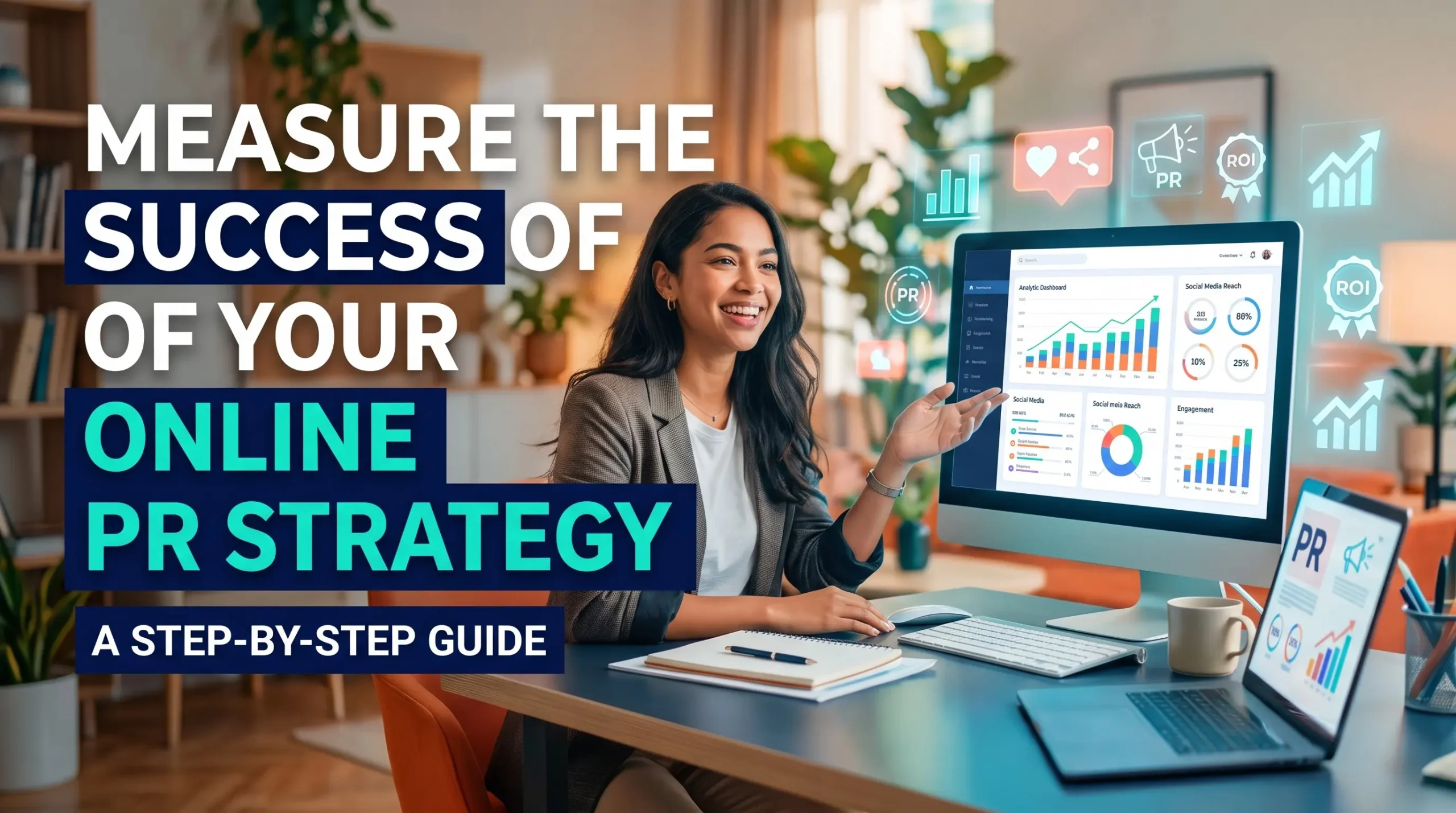 Measuring results helps businesses understand whether their launch communication is reaching the intended audience and supporting business objectives. Evaluation should combine media performance, website activity, audience engagement, and relevant business outcomes rather than relying on a single visibility metric.
Before the launch, teams should establish baseline measurements and decide how results will be tracked. This makes it easier to identify meaningful changes and compare performance across channels. Businesses should also distinguish between exposure and actual impact because a large number of mentions does not automatically translate into customer interest or sales.
Track Relevant Performance Metrics
Useful indicators include the number and quality of media mentions, referral traffic, product-page visits, branded search activity, social engagement, newsletter sign-ups, and qualified inquiries. Depending on the product, businesses may also track demonstration requests, trial registrations, or purchases.
The most important metrics should reflect the original launch objectives. For example, a business entering a new market may prioritize relevant audience reach, while a software company may focus on trial registrations. Evaluating these indicators together helps explain which communication activities deserve further investment.
Improve Future Launch Campaigns
Post-launch analysis should identify which messages attracted attention, which media relationships produced useful coverage, and which channels generated meaningful engagement. Businesses should also review customer questions, feedback patterns, and any communication problems that occurred during the launch.
These findings can guide future announcements, content planning, media outreach, and reputation management. An Online PR Strategy should evolve as audience expectations, industry conditions, and product offerings change. Regular evaluation helps businesses improve their approach and build more consistent results over time.
Conclusion
Creating an effective Online PR Strategy for product launches requires clear goals, audience research, compelling messaging, thoughtful media outreach, and consistent communication across digital channels. Businesses can strengthen Online Brand Visibility and Brand Awareness by combining useful content, relevant media relationships, influencer partnerships, and coordinated social media activities.
Online Reputation Management is equally important because customer feedback and public conversations can influence how audiences perceive a new product. By monitoring responses, communicating transparently, and measuring campaign results, businesses can learn from each launch and improve future performance. A well-planned approach helps turn a product announcement into an opportunity to build credibility, engage potential customers, and support long-term business growth.
Frequently Asked Questions
1. What is an Online PR Strategy for product launches?
An Online PR Strategy is a planned approach to promoting a product through digital media, press releases, influencer relationships, online publications, and social media. It helps businesses generate awareness, communicate product value, and build credibility with relevant audiences.
2. Why is online PR important for a product launch?
Online PR helps businesses introduce products to potential customers, attract media attention, establish credibility, and encourage conversations about their offerings. It also creates opportunities to reach relevant audiences through trusted publications and digital channels.
3. When should businesses start a product launch PR campaign?
Businesses should begin planning several weeks or months before launch, depending on product complexity and media requirements. Early preparation allows time for audience research, content development, media outreach, landing-page creation, and reputation monitoring.
4. How does online PR improve Online Brand Visibility?
Online PR can improve Online Brand Visibility by securing relevant media coverage, distributing useful content, encouraging industry discussions, and directing audiences to product pages. Visibility depends on the relevance and quality of coverage, not just the number of mentions.
5. What should a product launch press release include?
A press release should include a clear headline, launch details, product benefits, availability information, supporting facts, an appropriate quote, and media contact details. All claims should be accurate and easy for journalists to verify.
6. How does online PR support Brand Awareness?
Online PR introduces a brand and its products to relevant audiences through media coverage, creator partnerships, social media, and digital content. Consistent messaging helps people recognize the brand and understand what makes its offering relevant.
7. What role does Online Reputation Management play in product launches?
Online Reputation Management helps businesses monitor public conversations, respond to customer concerns, correct inaccurate information, and communicate transparently. These activities support customer confidence and help organizations address potential problems promptly.
8. How can small businesses create an affordable online PR campaign?
Small businesses can focus on targeted media outreach, useful website content, organic social media, relevant industry communities, and direct relationships with niche creators. Prioritizing the most relevant channels helps control costs while maintaining campaign focus.
9. How can businesses measure online PR campaign performance?
Businesses can measure media coverage quality, referral traffic, product-page visits, social engagement, branded search activity, qualified inquiries, and conversions. The best metrics depend on the campaign’s objectives and the product’s sales process.
10. What are common online PR mistakes during product launches?
Common mistakes include unclear messaging, poorly researched media lists, exaggerated product claims, inconsistent announcements, ignoring customer feedback, and failing to measure results. Careful preparation and regular monitoring help businesses avoid these problems.