Digital Marketing vs. Digital PR: What’s the Difference?
Digital marketing drives sales and leads, while digital PR builds brand trust and awareness. Together, they amplify results, combining short-term conversions with long-term credibility.
You’ve likely heard the terms “digital marketing” and “digital PR” used in business conversations, sometimes even interchangeably. While both play a crucial role in building a brand’s online presence, they are distinct disciplines with different goals, strategies, and metrics for success. Understanding this difference is key to creating a comprehensive strategy that drives both brand awareness and revenue.
This post will clarify the key distinctions between digital marketing and digital PR. We’ll explore their unique objectives, the tactics they employ, and how they work together to create a powerful online strategy. By the end, you’ll have a clearer picture of which approach—or combination of both—is right for your business goals.
What is Digital Marketing?
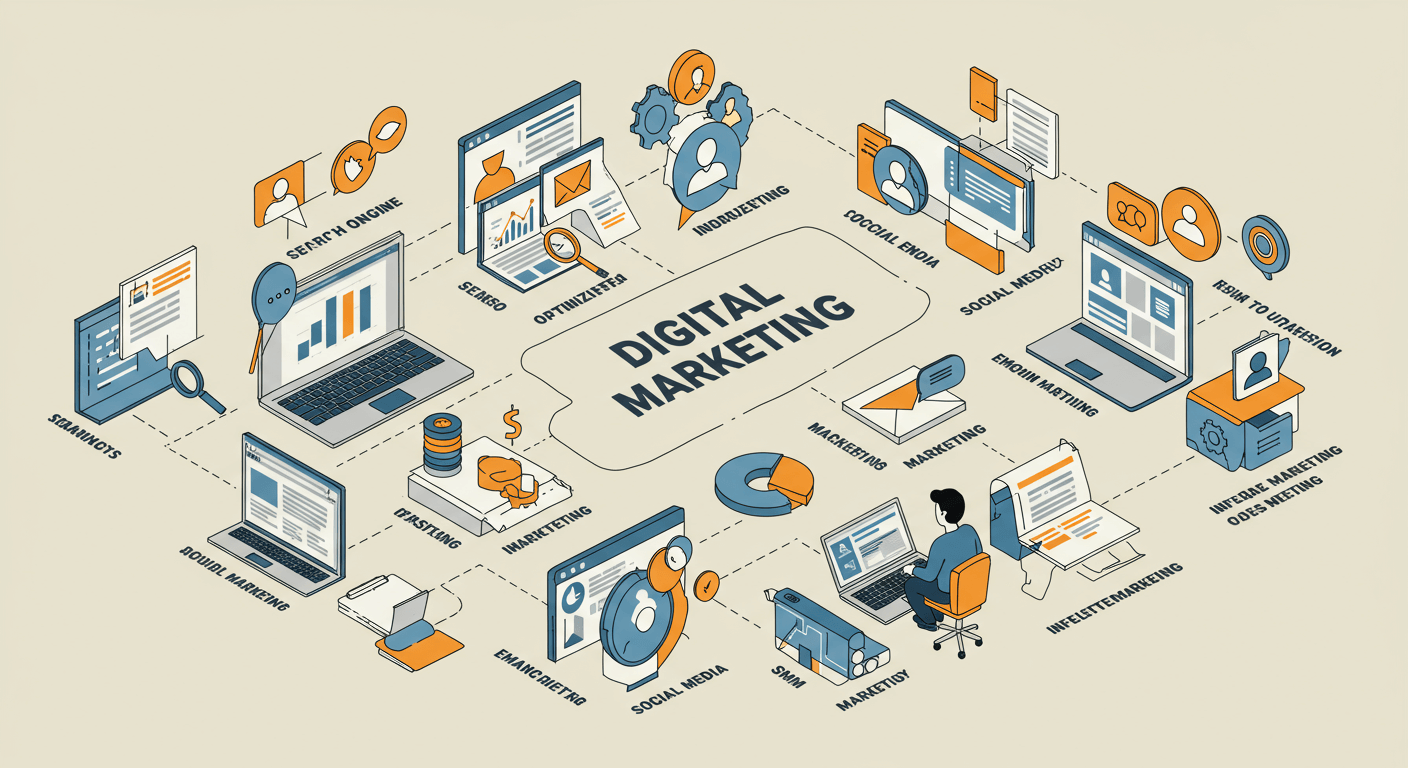
Digital marketing is a broad term that covers all marketing efforts that use an electronic device or the internet. It’s primarily focused on driving direct sales and lead generation through various online channels. The core objective is to reach potential customers at the right time and place to persuade them to make a purchase or take a specific action, like signing up for a newsletter or requesting a demo.
Digital marketing strategies are often data-driven, with a strong emphasis on measurable results and return on investment (ROI). Marketers use a variety of tools to track campaign performance, analyze customer behavior, and optimize their efforts for better outcomes.
Learn what digital marketing is in e-commerce to see how PR and marketing intersect for online businesses
Common Digital Marketing Tactics
To achieve their goals, digital marketers employ a wide range of strategies. Some of the most common include:
- Search Engine Optimization (SEO): Optimizing your website to rank higher in search engine results pages (SERPs), thereby increasing organic (non-paid) traffic.
- Pay-Per-Click (PPC) Advertising: Running paid ads on platforms like Google Ads or Bing Ads, where you pay a fee each time someone clicks on your ad.
- Social Media Marketing: Using social media platforms like Facebook, Instagram, and LinkedIn to promote products or services, engage with an audience, and drive traffic to a website.
- Content Marketing: Creating and distributing valuable, relevant, and consistent content—like blog posts, videos, and ebooks—to attract and retain a clearly defined audience.
- Email Marketing: Sending targeted emails to a list of subscribers to nurture leads, promote offers, and build relationships.
The success of these activities is measured with metrics like conversion rates, click-through rates (CTR), cost per acquisition (CPA), and overall ROI.
What is Digital PR?
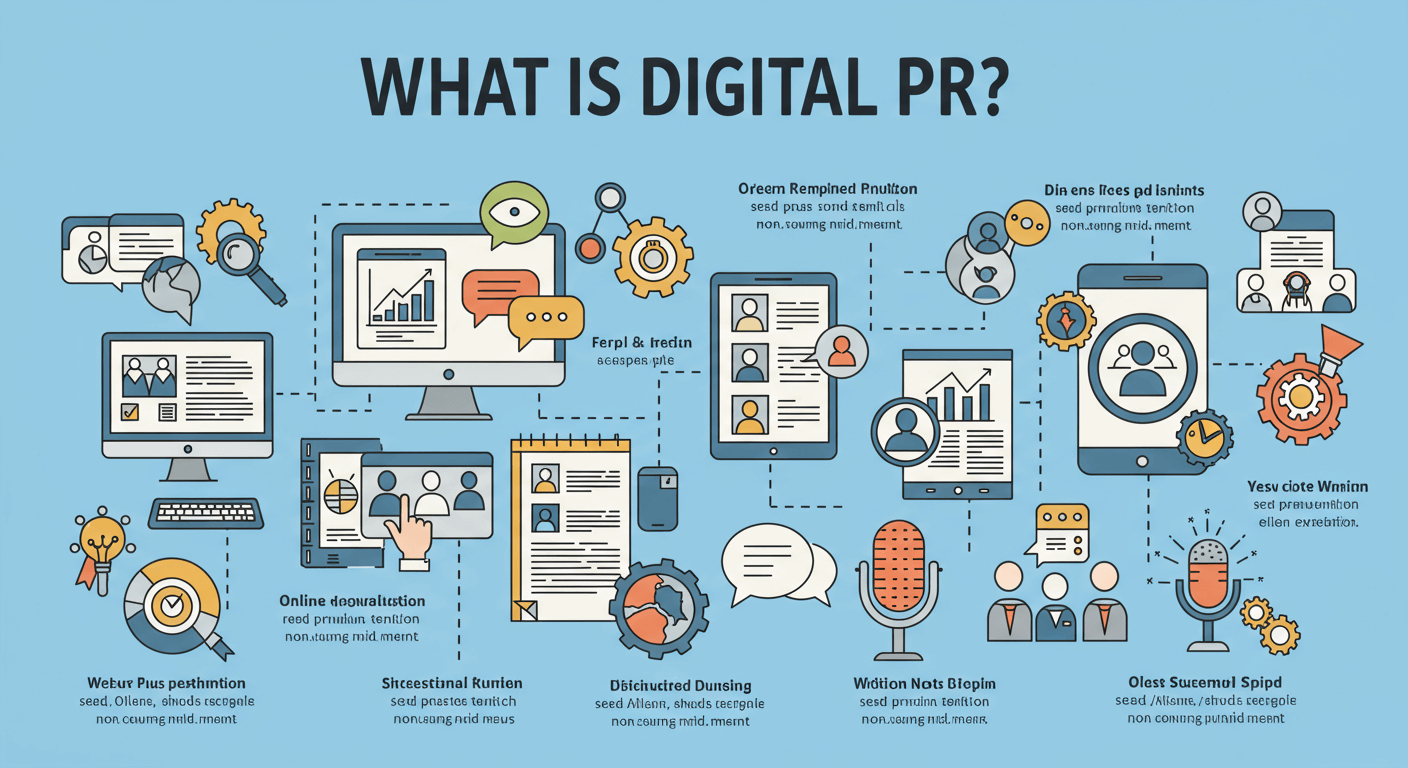
Digital PR, on the other hand, is a strategy used to increase a brand’s online presence and reputation through relationship-building. Unlike the direct sales focus of digital marketing, the primary goal of digital PR is to build brand awareness, credibility, and trust. It achieves this by securing high-quality backlinks, mentions in online publications, and positive reviews from authoritative sources.
Think of digital PR as the online equivalent of traditional public relations. Instead of targeting print magazines and newspapers, digital PR professionals build relationships with journalists, bloggers, and influencers to earn positive media coverage online. The focus is less on direct selling and more on shaping public perception and establishing the brand as a leader in its industry.
Key Digital PR Strategies
Digital PR professionals use several tactics to build brand authority and reputation:
- Link Building: Earning high-quality backlinks from reputable websites to improve search engine rankings and drive referral traffic. This is often done by creating compelling content that other sites want to link to.
- Online Media Relations: Building relationships with online journalists and influencers to secure mentions, features, and guest posting opportunities in relevant publications.
- Influencer Marketing: Collaborating with influencers to promote a brand to their followers, leveraging their credibility and reach to build trust.
- Online Reputation Management: Monitoring and managing a brand’s online reviews and mentions to maintain a positive public image.
Success in digital PR is measured by metrics like the number and quality of backlinks, domain authority, referral traffic, and overall brand sentiment. For a complete roadmap, see digital PR strategies that drive results
Digital Marketing and Digital PR: The Key Differences
While there’s some overlap, the fundamental differences between digital marketing and digital PR lie in their objectives, audiences, and measurement.
|
Aspect |
Digital Marketing |
Digital PR |
|---|---|---|
|
Primary Goal |
Generate leads and sales |
Build brand awareness and credibility |
|
Key Audience |
Potential and existing customers |
Journalists, bloggers, influencers, and the public |
|
Main Tactics |
SEO, PPC, email, social media ads |
Link building, media outreach, influencer relations |
|
Success Metrics |
Conversion rates, ROI, CPA |
Backlinks, domain authority, brand mentions |
|
Timeframe |
Often focused on short-term results |
Typically a long-term strategy |
In simple terms, digital marketing is about selling, while digital PR is about storytelling and building reputation.
For a deeper dive, check digital PR beyond press releases.
A Powerful Partnership

The most successful brands don’t choose between digital marketing and digital PR; they integrate them. When these two disciplines work together, they create a synergy that amplifies results.
For example, a digital PR campaign that earns a feature in a major online publication can drive a significant amount of referral traffic to a website. The digital marketing team can then use retargeting ads to convert those visitors into customers. Similarly, the high-quality content created for a digital marketing campaign can be a valuable asset for digital PR outreach, helping to secure backlinks and media coverage. Learn more in how digital marketing and PR work together for brand success.
By aligning their efforts, digital marketing and digital PR can create a powerful flywheel effect:
- Digital PR builds brand authority and earns high-quality backlinks, which improves SEO rankings.
- Higher SEO rankings drive more organic traffic to the website.
- Digital marketing tactics convert that traffic into leads and sales.
- Increased brand visibility from digital marketing makes future digital PR efforts more effective.
This integrated approach ensures that every effort contributes to both short-term sales goals and long-term brand-building, creating a sustainable path to growth.
How Digital Marketing and Digital PR Work Together
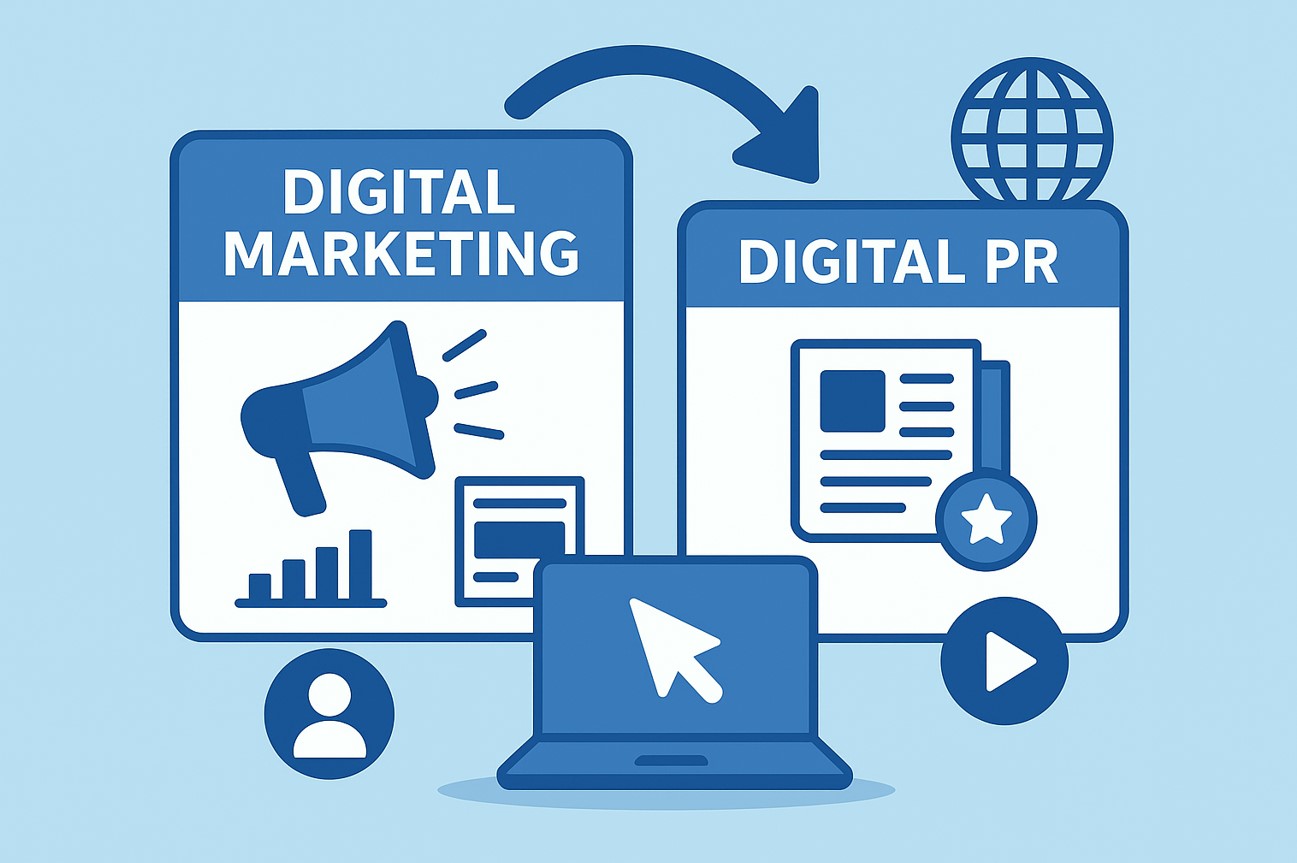
While digital marketing and digital PR have distinct goals, the real magic happens when they work in tandem. For example, a strong digital PR campaign that secures mentions in reputable online publications can significantly increase your website’s credibility. This creates a ripple effect: users are more likely to trust your brand, engage with your content, and ultimately convert.
Digital marketing can then amplify these PR wins by retargeting audiences who interacted with your earned media, using email campaigns, social media ads, or personalized content. Conversely, high-quality content produced for digital marketing campaigns—like blog posts, whitepapers, or infographics—can be leveraged in digital PR outreach to earn backlinks and media coverage. The synergy between the two disciplines strengthens brand authority, enhances SEO, and drives both immediate conversions and long-term trust.
Measuring the ROI of Digital Marketing vs Digital PR
One of the biggest challenges for businesses is understanding the return on investment (ROI) for these two approaches. Digital marketing offers relatively straightforward metrics such as click-through rates, conversion rates, cost per acquisition (CPA), and revenue generated. This makes it easier to directly tie campaigns to sales or leads.
Digital PR, on the other hand, focuses on less tangible—but equally valuable—metrics. These include brand mentions, domain authority, referral traffic, and audience sentiment. While it may take longer to see the financial impact of PR campaigns, their influence on brand reputation, customer trust, and organic search visibility can indirectly drive revenue over time.
By tracking both sets of metrics, companies can get a holistic view of their online performance. Digital marketing provides immediate feedback on sales-driven campaigns, while digital PR ensures the long-term credibility and visibility necessary to sustain growth.
Emerging Trends in Digital Marketing and Digital PR
Both digital marketing and digital PR are constantly evolving, driven by technology, consumer behavior, and market dynamics. One major trend is the rise of AI-powered tools that optimize campaigns, predict audience behavior, and automate content distribution. Personalization is also increasingly critical, with marketers and PR professionals using data to deliver tailored messages to specific audience segments.
Interactive content—such as polls, quizzes, and AR experiences—is another emerging trend that engages audiences more deeply while providing actionable insights. Additionally, video content and short-form social media clips are dominating engagement metrics, making them essential for both marketing and PR campaigns. Staying ahead of these trends ensures your strategy remains relevant and competitive.
The Role of Influencers in Digital Marketing and PR
Influencers are now a key bridge between marketing and PR efforts. For digital marketing, influencers help drive product awareness, engagement, and sales through sponsored posts, reviews, and affiliate partnerships. From a PR perspective, influencers lend credibility and amplify brand messaging, often securing organic media mentions and backlinks.
Integrating influencer strategies requires careful selection based on audience alignment, engagement rate, and brand values. Successful campaigns blend influencer content into broader marketing and PR strategies, creating synergy between paid promotions, earned media, and organic reach.
Building Cross-Functional Teams for Success
The most effective online strategies come from collaboration between digital marketing and PR teams. Cross-functional teams can ensure campaigns are cohesive, messaging is consistent, and resources are utilized efficiently.
Teams should include specialists in content creation, SEO, social media, analytics, and media relations. By holding regular strategy sessions, teams can coordinate campaigns, share insights, and respond rapidly to market changes. Cross-functional collaboration also enables better measurement of ROI by connecting marketing conversions with PR-driven brand awareness and credibility metrics.
Ethical Considerations in Digital Marketing and PR
As brands increasingly rely on digital channels, maintaining ethical standards is essential. Digital marketing and PR professionals must prioritize transparency, authenticity, and data privacy. Misleading advertising, fake reviews, or manipulative influencer campaigns can damage trust and lead to reputational crises.
Ethical considerations include:
-
Data Privacy: Respect audience consent and comply with regulations like GDPR and CCPA.
-
Authentic Messaging: Ensure all content accurately represents products, services, and partnerships.
-
Transparency in Influencer Marketing: Clearly disclose paid promotions or sponsorships.
-
Responsible Engagement: Avoid spreading misinformation or exploiting sensitive social issues.
Adhering to ethical practices not only protects your brand but also strengthens long-term relationships with audiences, reinforcing both marketing and PR objectives.
Choosing the Right Mix for Your Business
The optimal balance between digital marketing and digital PR depends on your business goals, industry, and target audience. Startups and small businesses may prioritize digital marketing to drive immediate leads and revenue. Larger organizations or companies in competitive markets may invest more heavily in digital PR to establish credibility and influence public perception.
The key is integration. Even a marketing-heavy company can benefit from PR efforts that boost backlinks, media coverage, and thought leadership. Similarly, a brand known for strong PR can convert more effectively by pairing it with targeted digital marketing campaigns. Assess your objectives, available resources, and growth strategy to determine how to allocate budget and effort effectively between these two disciplines.
Charting Your Course
Understanding the distinct roles of digital marketing and digital PR is the first step toward building a more effective online strategy. While digital marketing focuses on converting interest into action, digital PR works to build the trust and reputation that generates that interest in the first place.
Instead of viewing them as separate functions, consider how they can complement each other within your organization. A unified strategy that leverages the strengths of both can help you not only reach your sales targets but also build a brand that customers trust and admire for years to come.
Frequently Asked Questions (FAQ)
Can a small business benefit from both digital marketing and digital PR?
Yes. Even small businesses can integrate marketing and PR to build brand awareness, generate leads, and establish credibility. The scale and budget may differ, but the synergy is valuable for growth.
Which one should I focus on first—digital marketing or digital PR?
It depends on your immediate business goals. If the priority is driving sales or leads, digital marketing should take the lead. If building brand credibility and thought leadership is more important, start with digital PR. Ideally, integrate both over time.
How long does it take to see results from digital PR?
Digital PR is typically a long-term strategy. While some campaigns may generate immediate traffic through media coverage, measurable increases in SEO authority and brand trust usually take months to reflect fully.
Can digital PR improve my SEO?
Absolutely. Earning backlinks from reputable sources improves domain authority, boosts search engine rankings, and drives referral traffic. Digital PR and SEO work hand-in-hand for long-term visibility.
How do I measure the success of integrated campaigns?
Track both short-term and long-term KPIs. Digital marketing metrics include CTR, CPA, and revenue, while digital PR metrics include backlinks, referral traffic, mentions, and brand sentiment. Combining these gives a comprehensive view of campaign impact.
Is influencer marketing part of digital marketing or digital PR?
It can be part of both. In marketing, influencers drive sales or leads; in PR, they build credibility and brand awareness. The key is defining clear objectives for each campaign.