What Is Digital PR? A Guide for Financial Services

Digital PR helps financial services enhance brand visibility, build trust, and gain a competitive edge online. Discover what Digital PR is, its benefits, and effective strategies for success.
What Is Digital PR and Why Does It Matter?
Digital PR combines traditional public relations strategies with modern digital marketing techniques to strengthen a brand’s online presence. Like conventional PR, it focuses on building meaningful relationships, securing positive media coverage, and managing a brand’s reputation. However, Digital PR takes these efforts further by leveraging online tools such as search engine optimization (SEO), content marketing, social media, influencer collaborations, and online press releases to reach wider audiences in the digital space.
For the financial services sector, Digital PR is particularly important. It helps institutions establish authority, enhance credibility, and connect with potential clients who increasingly rely on online platforms for financial guidance. By integrating Digital PR with digital marketing campaigns and user-friendly website design, financial brands can ensure consistent messaging, increase brand visibility, and create engaging touchpoints for clients.
A well-executed Digital PR strategy enables financial institutions to gain coverage in authoritative publications, earn high-quality backlinks, and improve search engine rankings. It also supports social media amplification, allowing content to reach broader, highly targeted audiences. Over time, these efforts enhance brand trust, generate leads, and strengthen long-term client relationships.
In a competitive digital environment, ignoring Digital PR can mean missing out on opportunities to build credibility, expand reach, and grow your business online. By focusing on storytelling, media outreach, and strategic content creation, financial services can leverage Digital PR as a core component of their marketing and growth strategies, ensuring that their brand stays relevant, visible, and trusted in the modern online marketplace.
Understanding the Core Elements of Digital PR
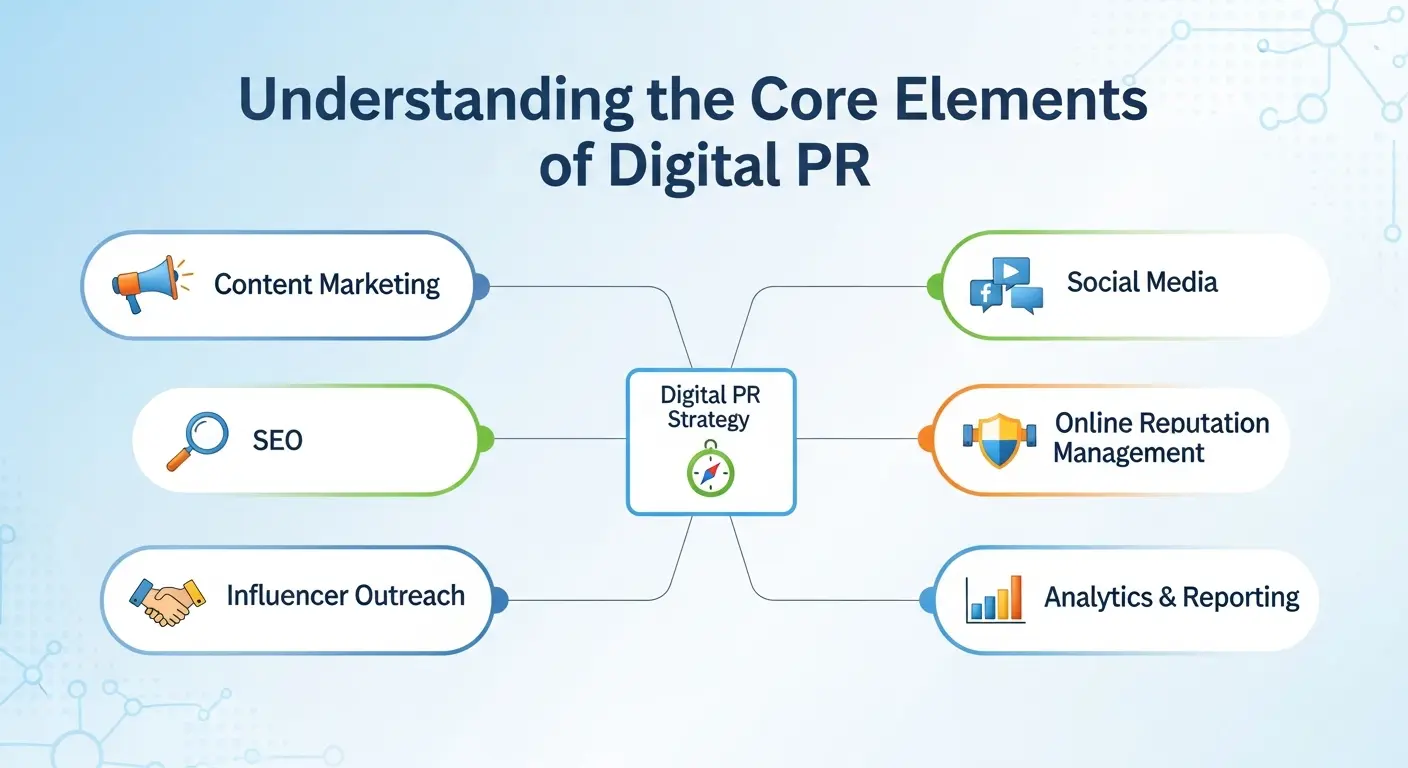
Digital PR is a comprehensive strategy that combines multiple tactics to build a strong online presence, enhance credibility, and drive engagement. In the competitive financial services sector, implementing an effective Digital PR strategy can help brands stand out, attract the right audience, and establish lasting authority. Here’s a closer look at its key components:
Content Creation
At the heart of Digital PR is high-quality, valuable content tailored to your target audience. This includes blog posts, industry reports, whitepapers, infographics, videos, and case studies. By addressing client concerns, offering actionable insights, and sharing thought leadership, financial services brands can position themselves as trusted experts while increasing opportunities for earned media coverage and backlinks.
Search Engine Optimization (SEO)
Content and SEO work hand in hand in a Digital PR strategy. Optimizing your content with relevant keywords—such as “digital marketing for financial services” or “website design for financial services”—ensures better search engine rankings, higher visibility, and more organic traffic. A strong SEO-driven Digital PR approach allows financial institutions to be discovered by prospects actively seeking solutions, enhancing brand credibility and reach.
Social Media Engagement
Social media platforms like LinkedIn, Twitter, and Facebook are essential channels for Digital PR. Engaging with industry influencers, sharing high-value content, and interacting directly with clients strengthens your online presence and amplifies your brand story. Consistent engagement also increases brand awareness, encourages client trust, and extends the reach of your campaigns.
Online Reputation Management
In financial services, trust is critical. Digital PR includes monitoring online mentions, responding promptly to reviews, highlighting client success stories, and addressing concerns transparently. A well-managed reputation signals reliability to potential clients, reinforces credibility, and supports SEO efforts by encouraging authoritative mentions and backlinks from reputable sources.
By combining content creation, SEO, social media engagement, and reputation management, Digital PR offers a holistic approach for financial services brands to increase visibility, build authority, and maintain trust in the digital marketplace. Integrating these elements ensures your brand not only attracts attention but also converts prospects into loyal clients.
Why Digital PR Is Essential for Financial Services
Digital PR plays a pivotal role in the financial services industry, where trust, credibility, and authority are key drivers for customer decisions. By leveraging strategic Digital PR initiatives, financial brands can enhance reputation, attract the right audience, and strengthen their online presence. Here’s how Digital PR delivers measurable impact:
Enhances Brand Reputation and Credibility
Financial decisions are high-stakes, and clients want to engage with brands they can trust. Digital PR builds credibility by securing media coverage, publishing thought leadership articles, and leveraging client testimonials across respected platforms. Each mention or feature reinforces authority, establishing your brand as a trustworthy leader in financial services.
Attracts Targeted Website Traffic
An effective Digital PR strategy ensures your brand reaches the right audience. Backlinks on high-authority financial websites, featured articles on industry blogs, and shareable content on LinkedIn and Twitter drive qualified traffic to your website. This targeted exposure converts casual visitors into potential leads and long-term clients.
Boosts Search Engine Rankings
Digital PR directly supports SEO by building high-quality backlinks, optimizing content, and targeting financial industry keywords. As your website climbs search engine rankings, your visibility grows, increasing brand authority and reinforcing your reputation among prospects actively seeking financial services.
Builds Trust with Valuable Content
Providing insightful, actionable, and easy-to-understand content is a core part of Digital PR. Whether it’s answering financial questions, offering market insights, or simplifying complex topics, valuable content positions your brand as a reliable partner, helping potential clients make informed financial decisions.
By integrating these strategies, Digital PR empowers financial services brands to enhance credibility, boost organic visibility, attract qualified leads, and build lasting trust with their audience. In today’s digital-first environment, a well-executed Digital PR approach is no longer optional—it’s essential for long-term success.
Digital PR Strategies for Financial Services

For financial services companies, implementing effective Digital PR strategies is essential to build credibility, enhance visibility, and attract the right clients. By aligning Digital PR efforts with business objectives, brands can establish authority and strengthen their digital presence. Here are key strategies to consider:
Content Marketing
Creating high-value, informative content is the cornerstone of any Digital PR strategy. Develop a content calendar that addresses client pain points, industry trends, and emerging financial topics. Examples include:
- Blog posts explaining asset management options or investment strategies.
- Infographics breaking down complex tax-saving techniques or retirement plans.
- Educational videos guiding clients through mortgage processes or financial planning pitfalls.
By distributing this content across multiple channels, Digital PR ensures that your insights reach the right audience while earning backlinks from reputable websites.
Social Media Engagement
Social media is a powerful platform for amplifying Digital PR efforts. Financial brands should focus on professional networks like LinkedIn while maintaining relevance on platforms such as Twitter. Effective tactics include:
- Sharing articles, industry reports, and resources.
- Engaging with influencers and thought leaders through comments, reposts, and collaborations.
- Hosting polls, Q&A sessions, or live webinars addressing common financial queries.
Active social engagement not only builds brand authority but also reinforces the credibility of your Digital PR campaigns.
Influencer Marketing
Partnering with credible financial experts—planners, advisors, or analysts—can enhance your Digital PR impact. Working with a Public Speaker or industry influencer lends trustworthiness to your brand and exposes your services to a wider, highly relevant audience. Their endorsements amplify the reach of your content and help generate organic backlinks, further strengthening SEO performance.
Online Reputation Management
A critical component of online marketing is managing your online reputation. Monitor platforms like Google Reviews, Trustpilot, and social media to respond promptly to feedback. Address negative experiences professionally while highlighting positive testimonials and client success stories. Maintaining a strong, trustworthy image helps retain existing clients and attracts new prospects while improving overall brand perception.
By integrating these strategies, financial services companies can create a comprehensive plan that enhances credibility, drives targeted traffic, and strengthens authority in the digital landscape. A consistent, data-driven approach ensures measurable results and long-term growth.
Measuring the Success of Digital PR Campaigns

Tracking the success of your Digital PR Campaigns is essential to understand performance, optimize strategies, and maximize ROI. By measuring key metrics, financial services brands can ensure their efforts are delivering tangible results. Here are some critical areas to focus on:
Website Traffic
Monitor how much traffic is generated from Digital PR activities, including backlinks, press coverage, and social media campaigns. Increased referral traffic from authoritative sites indicates that your content and outreach are resonating with the right audience.
Engagement Rates
Evaluate audience interactions on social platforms where Digital PR content is shared. Metrics like likes, comments, shares, and click-throughs demonstrate how effectively your content captures attention and drives engagement.
Domain Authority & Backlinks
High-quality backlinks are a core result of effective Digital PR. Tools like Moz or Ahrefs help track the number and authority of websites linking to your content, reflecting the credibility and reach of your campaigns.
Search Engine Rankings
Track where your content ranks for target keywords such as “digital marketing for financial services.” Successful Digital PR strategies often improve SEO performance, helping your content reach a broader audience organically.
Media Mentions
Monitor how often your press releases, thought leadership articles, or blogs are picked up by reputable media outlets. Media mentions not only enhance brand credibility but also contribute to backlink profiles that strengthen SEO.
By using tools like Google Analytics, SEMrush, and Brandwatch, you can measure the impact of your Digital PR efforts, refine strategies based on data, and demonstrate measurable ROI to stakeholders. A well-tracked Digital PR campaign ensures continuous growth in brand visibility, authority, and audience engagement.
Digital PR Is Redefining the Future of Financial Services
In today’s fast-paced digital landscape, establishing a strong online presence is no longer optional—it’s essential. For financial services, where trust and credibility are critical, online marketing strategies have become transformative tools to elevate brands and foster meaningful client relationships.
By integrating approaches such as content marketing, social media engagement, search engine optimization (SEO), and online reputation management, financial institutions can build authority, attract targeted audiences, and drive measurable growth. High-quality content, press coverage, and strategic media outreach ensure your brand is seen as a trusted advisor in the financial space.
Getting started involves understanding your audience’s needs, creating relevant content, and designing campaigns that resonate with your target market. Thought leadership articles, educational guides, infographics, and video content are all effective ways to strengthen credibility while improving online visibility.
Early adoption of these strategies allows financial brands to stand out in a competitive marketplace, building trust and long-term loyalty with clients. For tailored guidance, connect with industry experts or explore solutions specifically designed for financial services.
To deepen your marketing knowledge, learn the differences between inbound and outbound marketing and how these approaches complement online marketing for maximum impact.
Key Insights About Digital PR for Financial Services
| Topic | Key Points |
|---|---|
| What is it? | Combines traditional PR with digital marketing to boost online visibility, credibility, and authority. |
| Core Elements | Content creation, SEO optimization, social media engagement, online reputation management. |
| Benefits | Increases brand trust, drives website traffic, earns high-quality backlinks, improves search rankings. |
| Strategies | Content marketing, influencer collaborations, social media campaigns, managing online reviews/testimonials. |
| Metrics to Track | Website traffic, engagement rates, domain authority, backlinks, search engine rankings, media mentions. |
| Importance | Essential for financial services to build trust, stand out in the digital space, and drive long-term growth. |
FAQ: Digital PR for Financial Services
What is it?
It combines traditional public relations with online marketing strategies to boost a brand’s visibility, credibility, and authority. It leverages content creation, social media, influencer outreach, and media coverage.
How does it benefit financial services?
In financial services, it helps build trust with clients, drives qualified traffic to websites, strengthens online reputation, and positions your brand as an industry authority.
How does it support SEO?
It earns high-quality backlinks from authoritative websites and online publications. These links improve search rankings, domain authority, and organic traffic, making it a key part of SEO strategy.
What are the most effective strategies?
Successful strategies include publishing informative content, collaborating with industry influencers, active social media engagement, and managing online reviews to maintain a strong reputation.
How can the success of campaigns be measured?
Track metrics like website traffic, engagement rates, backlinks, domain authority, keyword rankings, and media mentions to understand the impact of your efforts.
How can financial services improve online reputation?
By actively monitoring reviews, social media mentions, and client feedback, responding promptly and professionally, and highlighting positive testimonials, financial brands can build trust and credibility.
Why is content important for financial services marketing?
High-quality content like blogs, infographics, and videos educates clients, showcases expertise, attracts targeted traffic, and strengthens brand authority in a competitive online landscape.